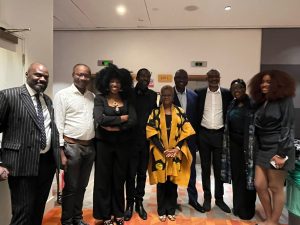
Diplomats, government representatives, investors and business leaders gather in London to advance Africa–UK economic cooperation, democratic governance, infrastructure development and international partnerships.
London, United Kingdom | 13 October 2026

The 11th Annual London Political Summit and Awards 2026 opened on Monday, 12 October, at the prestigious Institute of Directors (IoD), 116 Pall Mall, London, bringing together diplomats, policymakers, government delegations, international investors, business executives, academics and development professionals to strengthen economic and diplomatic relations between Africa and the United Kingdom.
Organised by Cater and Merger Consult UK under the leadership of Mazi Godson Azu, the opening Business Dialogue Meeting focused on “Africa–UK Trade, Investment, Enterprise and Sustainable Development: Converting Political Relationships into Economic Partnerships.”
The gathering formed part of the summit’s broader theme, “Pan-Africanism and the African Union: The People, Place, Politics, Power and Peace — Trade by Peace and the Raila Odinga Diplomacy Approach.”
Discussions highlighted the need to move beyond diplomatic declarations and political engagements towards practical investments, sustainable infrastructure, stronger institutions, education partnerships and measurable economic opportunities for African communities.
Gambian High Commissioner Calls for Justice, Peace and Accountable Leadership
One of the major highlights of the gathering was an address by Her Excellency Dr. Fatou Bom Bensouda, The Gambia’s High Commissioner to the United Kingdom, who delivered a powerful message on diplomacy, justice, democratic governance and sustainable development in Africa.
Drawing from her extensive experience in international criminal justice and diplomacy, Bensouda emphasised that effective leadership must be measured by its impact on the lives of ordinary citizens rather than political authority or institutional declarations alone.
She reflected on her early legal career and experiences involving women seeking justice after domestic and sexual abuse, explaining how these encounters strengthened her commitment to human rights, accountability and the protection of vulnerable communities.
The High Commissioner stressed that diplomacy and justice, although operating through different institutions, remain essential to lasting peace and reconciliation.
She explained that political agreements may bring hostilities to an end, but sustainable peace requires addressing the underlying grievances, institutional failures and injustices that contribute to conflict.
Speaking on Africa’s role in international governance, she acknowledged the continent’s contributions to the establishment of the Rome Statute system and the International Criminal Court.
She further identified the African Union as an important institution for advancing constitutional governance, human rights, regional security and continental cooperation.
Her message underscored the importance of building institutions that inspire public confidence, protect human dignity and deliver opportunities for future generations.
Business Leaders Advocate Stronger Africa–UK Investment Partnerships
The Business Dialogue Meeting featured discussions on attracting international investment, improving trade relations and strengthening cooperation between African governments and British businesses.
Dr. Joel Popoola, who oversees the Institute of Directors’ Africa-related activities and serves as Business Dialogue Chair, welcomed participants and highlighted the importance of transforming diplomatic and institutional relationships into sustainable commercial opportunities.
The discussions brought together business leaders and representatives from investment advisory organisations, trade institutions and professional associations.
David Smith, Chairman of the British Africa Business Alliance (BABA), emphasised the importance of communication, business networking and credible investment proposals in attracting international investors to African markets.
He explained that successful investment partnerships require clear commercial objectives, detailed project preparation, financial feasibility assessments and effective risk management.
Smith highlighted ongoing and prospective multibillion-dollar investment opportunities involving Nigeria, Zimbabwe and Gabon, demonstrating the potential of diaspora-led business connections.
He also discussed agricultural technology initiatives, including the digitisation of farms belonging to approximately 30,000 small-scale farmers in Jigawa State, Nigeria, to improve production monitoring, agricultural planning and market access.
Participants agreed that African countries must strengthen their capacity to prepare bankable projects and provide investors with the confidence required to commit long-term capital.
Infrastructure, Railways and Logistics Identified as Critical to African Trade
Infrastructure development emerged as another major focus of the summit, with speakers highlighting the importance of roads, railways, ports, warehouses and modern logistics systems in expanding trade across Africa.
The discussions examined how inadequate transportation networks continue to limit economic growth, agricultural exports and regional industrial development.
A proposed railway development in Nigeria was cited as an example of the challenges facing major infrastructure projects, particularly difficulties associated with feasibility funding, investment mobilisation and project execution.
Speakers argued that improved railway connectivity could support the movement of agricultural produce, minerals and manufactured goods from inland production centres to international markets.
The panel also emphasised the importance of the African Continental Free Trade Area (AfCFTA) in creating opportunities for integrated infrastructure and cross-border commerce.
Representatives of strategic advisory and investment organisations called for stronger collaboration among governments, development finance institutions, private investors and technical experts.
They further advocated long-term economic planning, improved regulatory frameworks and the development of strategic commercial hubs capable of attracting international capital.
Occupational Health, Safety and Regulatory Compliance Take Centre Stage
The importance of occupational health and safety in economic development was strongly emphasised during the discussions.
Representatives of the Occupational Safety and Health Association UK highlighted the risks associated with poor workplace safety, inadequate project supervision, weak regulatory compliance and ineffective institutional management.
Speakers warned that substantial investments could be undermined by avoidable accidents, regulatory failures and insufficient professional oversight.
African exporters were also encouraged to improve compliance with international standards covering product packaging, labelling, licensing, transportation, hazardous materials and quality assurance.
The discussions stressed that African businesses seeking access to British, European and other international markets must understand the legal and technical requirements governing their products and services.
Participants agreed that occupational safety should form an integral part of national development strategies, infrastructure planning and international investment agreements.
African Diaspora Recognised as a Strategic Economic Asset
Another major outcome of the summit was the recognition of the African diaspora as a vital resource for investment, innovation, professional expertise and international business development.
Speakers called on African governments to develop more structured relationships with diaspora professionals, particularly those working in finance, engineering, technology, education and international trade.
David Smith highlighted an example in which approximately 20 specialist railway engineers from the African diaspora contributed their expertise towards the development of a railway proposal.
Other participants argued that diaspora communities could help British small and medium-sized enterprises establish commercial relationships with African businesses without requiring immediate large-scale investments.
The summit encouraged greater engagement between African governments, UK-based professionals and international institutions to accelerate technology transfer, enterprise development and industrial growth.
Education Partnerships and Youth Development Highlighted
Education and skills development also featured prominently in the summit’s deliberations.
Participants stressed that Africa’s rapidly growing youth population represents an enormous economic opportunity, provided governments invest in practical education, vocational training, technological skills and employment creation.
The discussions examined potential partnerships between African and British universities, including transnational education programmes, joint academic qualifications, institutional collaborations and international branch campuses.
A university vice-chancellor from the Benue State delegation highlighted emerging opportunities for educational cooperation between Nigerian and British institutions.
He drew attention to regulatory developments supporting transnational education in Nigeria and encouraged UK universities to establish mutually beneficial partnerships with Nigerian institutions.
Speakers emphasised that such partnerships should promote academic quality, knowledge transfer, research collaboration and workforce development.
They also called for closer cooperation between universities and industry to ensure that graduates acquire practical skills relevant to modern labour markets.
International Trade, Due Diligence and Sustainable Investment
A subsequent panel titled “From Opportunity to Enterprise: Building Sustainable Cross-Border Partnerships” examined the practical requirements for successful international business relationships.
The discussion featured contributions from trade and investment professionals, including Janet, founder of Impact Tower; Omar Hussein, a UK-based business executive; and other international advisory specialists.
Participants emphasised that international business partnerships must be supported by credible institutional relationships, commercial verification, legally enforceable agreements and thorough due diligence.
Speakers warned that failure to investigate prospective business partners could expose African institutions and investors to financial losses, sanctions-related complications and reputational damage.
The panel also explored the growing importance of environmental, social and governance considerations in international investment decisions.
Participants noted that investors increasingly evaluate projects not only on their financial returns but also on their environmental impact, contribution to local communities and long-term sustainability.
The discussion encouraged African governments and businesses to strengthen legal compliance, corporate governance and sustainable trade practices to improve their competitiveness in international markets.
Benue State Delegation Participates in Development Discussions
The summit also welcomed representatives of the Benue State Government of Nigeria, whose participation highlighted opportunities for international cooperation in education, agriculture, infrastructure and investment.
Members of the delegation included representatives from the state’s education sector and university leadership.
Discussions referenced Benue State’s agricultural potential and the importance of improving transportation, processing facilities, market access and institutional partnerships.
The delegation’s participation reinforced the role of subnational governments in attracting investment and building direct economic relationships with international partners.
Summit Honours Raila Odinga’s Legacy of African Peace and Diplomacy
The 2026 summit also recognised the enduring contributions of the late Rt. Hon. Raila Amolo Odinga, former Prime Minister of Kenya and Global Grand Patron of the London Political Summit and Awards.
Odinga, who was conferred with the summit’s Global Grand Patron recognition in 2019, was remembered for his contributions to African political dialogue, democratic development, peacebuilding and continental cooperation.
The summit’s overarching theme reflects the continuing importance of diplomatic engagement, reconciliation and Pan-African cooperation in addressing the continent’s political and economic challenges.
The event also acknowledged the historical contributions of former Kenyan President Uhuru Kenyatta to political reconciliation and African leadership.
From Political Dialogue to Economic Transformation
A central message emerging from the opening sessions was that Africa’s development ambitions must be supported by credible institutions, well-prepared investment projects, modern infrastructure, practical education and sustainable international partnerships.
Participants agreed that the continent possesses significant natural resources, entrepreneurial potential and human capital, but must strengthen the systems required to convert these advantages into lasting economic prosperity.
The summit further reinforced the importance of African leadership in shaping international partnerships, with speakers encouraging governments and institutions to negotiate from positions of confidence, strategic clarity and mutual respect.
As the 11th Annual London Political Summit and Awards 2026 continues with further diplomatic and institutional engagements, the opening Business Dialogue Meeting has established a strong foundation for discussions on Africa’s future economic relationships with the United Kingdom and the wider international community.
Under the leadership of Mazi Godson Azu, Convener and Summit Director, the London Political Summit and Awards continues to provide an international platform connecting political leadership, diplomacy, business, education and development.
The message from London was clear: Africa’s future will depend not merely on political declarations or international goodwill, but on the ability of governments, institutions and businesses to translate cooperation into measurable improvements in the lives of their people.
— End —