
By Mazi Godson Azu
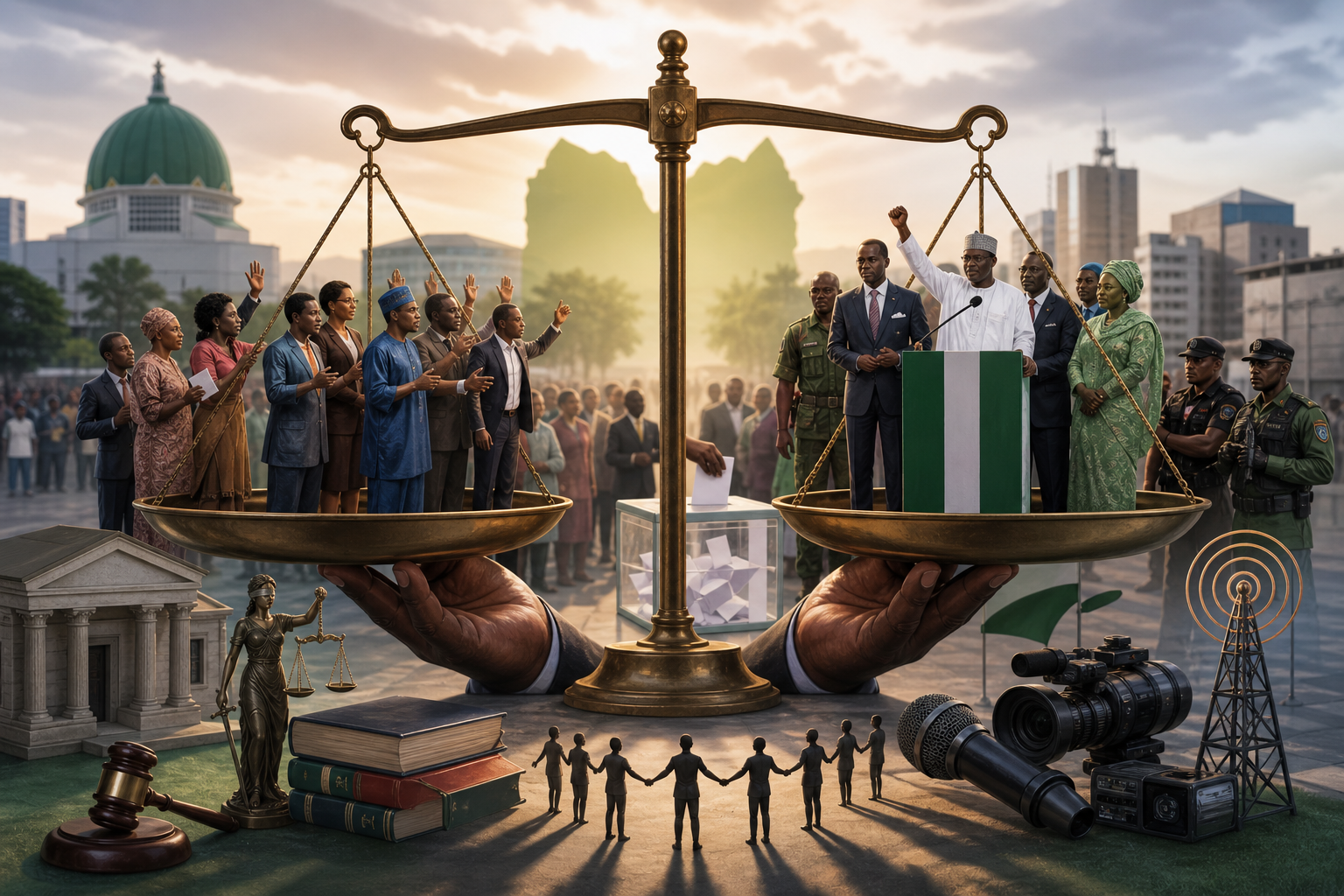
Progressivism, at its core, is the belief that societies can improve through deliberate political action, institutional reform, and social innovation. In the 21st century, it has come to represent a broad ideological current that seeks to advance the interests of ordinary citizens through responsive governance, equity-driven policies, and expanded democratic participation. Yet, within the Nigerian political context, an important question emerges: does progressivism strengthen or undermine competitive opposition politics?
This question cannot be answered without situating progressivism within the broader framework of political institutionalism—the study of how institutions shape political behaviour, incentives, and outcomes.
Progressivism in Historical and Comparative Context
Historically, progressive movements across democracies—from early reformers in the United States to modern social democratic parties in Europe—have aimed to curb corruption, regulate corporate excess, expand suffrage, and promote social welfare. These movements were not anti-competition; rather, they sought to institutionalize fairness within competition.
Comparatively, in established democracies:
- Progressivism has coexisted with strong opposition parties, ensuring accountability.
- Electoral systems have been structured to guarantee alternation of power, not dominance.
- Institutions such as independent electoral bodies, judiciary systems, and free media have served as neutral arbiters of political contestation.
Thus, progressivism, in its ideal form, does not negate opposition politics—it refines it.
Political Institutionalism and the Nigerian Reality
In Nigeria, political outcomes are heavily mediated by institutional strength—or weakness. Political institutionalism highlights that:
- Where institutions are weak, ideologies become tools of elite consolidation rather than public transformation.
- Where institutions are strong, ideologies are channeled into policy competition and governance performance.
Nigeria’s democratic journey has been marked by:
- Fragile party structures
- Personalistic politics over ideological consistency
- Electoral irregularities that weaken trust in outcomes
In such an environment, “progressivism” risks being reduced to rhetoric, unless anchored in institutional reforms that guarantee:
- Electoral transparency
- Judicial independence
- Internal party democracy
Without these, progressivism may unintentionally align with dominant-party tendencies, limiting genuine opposition.
Electoral Competitiveness and Political Pluralism
A defining feature of any functional democracy is electoral competitiveness—the real possibility that incumbents can be voted out of power.
Progressivism should, in principle:
- Expand voter access
- Reduce barriers to political participation
- Encourage issue-based campaigns over identity politics
However, in practice, tensions arise when:
- Progressive rhetoric is used to justify centralized political control
- Opposition voices are delegitimized in the name of “national development”
- State resources are unevenly deployed to favour incumbents
Comparatively, countries with high democratic performance ensure:
- Level playing fields for all parties
- Transparent campaign financing
- Strong electoral oversight bodies
For Nigeria, the challenge is ensuring that progressivism does not become synonymous with political dominance, but instead promotes healthy competition and alternation of power.
Ideological Spectrum and Nigerian Political Identity
Globally, political ideologies are often mapped across a spectrum:
- Left (Progressive/Liberal): Emphasis on equality, reform, and social welfare
- Right (Conservative): Emphasis on tradition, stability, and market freedom
Nigeria’s political parties, however, often lack clear ideological differentiation, resulting in:
- Policy inconsistency
- Weak voter alignment based on ideas
- Opportunistic political coalitions
This absence of ideological clarity undermines both progressivism and conservatism as meaningful frameworks for governance, reducing politics to power struggles rather than policy debates.
Democratic Justice and the Imperative of Peace
No political ideology can be sustainable without democratic justice—the assurance that:
- Votes count
- Rights are protected
- Laws are applied equally
Democratic justice is the foundation of peaceful political coexistence. Where citizens perceive injustice:
- Electoral violence increases
- Political apathy deepens
- Legitimacy of government erodes
Progressivism must therefore be evaluated not only by its promises of reform but by its commitment to:
- Rule of law
- Inclusion of opposition voices
- Peaceful transfer and sharing of power
Peace is not merely the absence of conflict; it is the presence of fairness, trust, and institutional credibility.
Power Dynamics in Nigerian Politics
Understanding power is essential to evaluating both progressivism and opposition politics. Political power manifests in various forms:
- Legitimate power through elected authority
- Expert and informational power through policy knowledge
- Referent and charismatic power through public trust
- Coercive power through state enforcement mechanisms
In weak institutional settings, coercive and patronage-based power often overshadow democratic legitimacy. A truly progressive system must rebalance power toward legitimacy, transparency, and citizen participation.
Conclusion: Progressivism as a Complement, Not a Threat
Progressivism is not inherently against competitive opposition politics. On the contrary, when properly institutionalized, it:
- Strengthens democratic participation
- Enhances accountability
- Promotes policy-driven competition
However, in the Nigerian context, the key issue is not the ideology itself, but how it is practiced within institutional constraints.
For progressivism to contribute meaningfully to Nigeria’s democratic evolution, it must:
- Support strong, independent institutions
- Encourage vibrant opposition politics
- Uphold electoral integrity
- Promote justice as the basis for peace
Ultimately, a progressive democracy without opposition is incomplete, and an opposition without institutional protection is ineffective. The balance between both is where Nigeria’s democratic future lies at this crucial moment of politicking.
Godson. Azu is a uk based International Relations and Politics Expert, Commentator and Consultant.