
By Sayo Adeyemo.
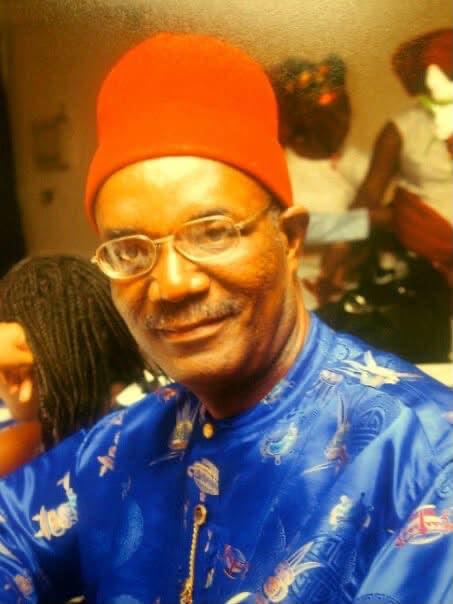
For decades, Thad Ugha operated on the fringes of legitimate commerce, weaving a complex web of financial deception across two continents. Today, at 70 years old, the man who spent a lifetime attempting to outrun accountability finds himself broke, pauperised, and trapped by the very destiny he spent millions trying to avoid. Nemesis and karma have finally caught up with a career criminal whose legacy is defined not by wealth, but by destroyed lives and broken institutions.
The Dual Playbook: From Lagos Scams to Atlanta Fraud
Ugha’s career path shows a calculated transition from corporate asset concealment, Ponzi schemes and racketeering to systemic federal bank fraud. An analysis of his record reveals a distinct methodology of deception:
- The 1993 Nigerian Playbook (Civil Dispute): Operating as the head of Shelter Savings & Loans, Ugha utilised finance-lease distortions involving high value, third-party industrial assets, most notably a soundproof Perkins generator. When payments defaulted, the assets were withheld from their rightful owners. To evade legal consequences, Ugha used territorial manipulation, moving the disputed property from Lagos to Anambra State to exploit jurisdictional gray areas. This triggered over a decade of litigation, culminating in the Supreme Court case Capital Bancorp Limited v. Shelter Savings and Loans Limited & Anor, while Ugha fled to the United States.
- The 2004–2012 Atlanta Playbook (Criminal Indictment): In the United States, the strategy evolved into a structured real estate property-flipping syndicate using artificially inflated valuations. Ugha used falsified loan-verification information and fake statements to secure excessive financing from federally insured banks. When caught, his evasion tactic shifted to a defense of “deliberate ignorance”, attempting to argue he was unaware of the fraudulent nature of the deals. The U.S. federal justice system rejected the defense, resulting in a criminal conviction, a federal prison sentence, and mandatory deportation.
Weaponising Public Sympathy: The Crowdfunding Deception
At the height of his criminal operations in the United States, Ugha’s greed extended beyond institutional targets to individual exploitation. While actively defrauding banks, corporations, and private individuals, Ugha exploited public sympathy by launching crowdfunding campaigns under the guise of family medical emergencies and support for his wife.
Online public records and community reports indicate that these appeals targeted the generosity of unsuspecting community members, professional networks, and the Nigerian diaspora. While Ugha was siphoning millions through illicit real estate schemes alongside co-defendants Michael Asumda, George Hayford, and Pino Ude, he was simultaneously sponging significant sums of money off innocent individuals who believed they were contributing to a charitable cause. This money was weaponised to fund his legal defense and sustain a lifestyle built entirely on deception, leaving a trail of financially devastated families, some of whom were driven to untimely deaths due to the severe stress and ruin he caused.
No Expiration Date on Justice: A Call to Action for Nigerian Authorities
Following his mandatory deportation from the United States, a country he had planned to live in permanently, Ugha has been forced back to Nigeria. He now lives in constant paranoia, looking over his shoulder in the very nation he spent decades trying to avoid.
For the victims of his early financial schemes and those impacted by his multi-decade trajectory of fraud, there is no expiration date on criminal accountability. The Nigerian authorities must now open their books, review past investigations, and ensure that Thaddeus Ugha faces full legal reckoning on domestic soil. Accountability remains the ultimate consequence he seeks to escape, but true justice demands full restitution for his victims and their families.