
By Godson Azu
UK-Based International Relations and Politics Expert, Analyst, Commentator and Adviser
Introduction: Democracy at a Constitutional Crossroads
As major elections approach between 2026 and 2027 across the United Kingdom, United States, Nigeria, and Kenya, an urgent constitutional question resurfaces within democratic discourse:
Is the judiciary truly independent, and does the doctrine of separation of powers still function as intended in modern governance?
The classical architecture of democracy rests on three institutional pillars — Executive, Legislature, and Judiciary — designed to prevent tyranny through mutual restraint. Yet contemporary political developments suggest a growing imbalance. Across both presidential and parliamentary systems, executive authority appears increasingly dominant, raising concerns about judicial neutrality, constitutional integrity, and democratic sustainability.
This article revisits the philosophical foundations, comparative global practices, and the Nigerian political reality to interrogate whether separation of powers remains a living principle or merely a constitutional ideal.
- The Philosophical Origins of Separation of Powers
The doctrine originates primarily from Baron de Montesquieu, whose seminal work The Spirit of the Laws (1748) argued:
“There is no liberty if the power of judging be not separated from the legislative and executive powers.”
Montesquieu’s concern was simple yet profound: concentration of power inevitably produces despotism.
Earlier thinkers reinforced this logic:
• John Locke distinguished legislative and executive authority as safeguards against arbitrary rule.
• Aristotle identified deliberative, magistrative, and judicial functions within political organization.
• James Madison, in Federalist No. 51, famously observed:
“Ambition must be made to counteract ambition.”
Thus, separation of powers was never meant to create isolation between institutions but structured tension — a system of checks ensuring liberty.
- Separation vs. Interdependence: Theory Meets Political Reality
Modern governance reveals a paradox:
Absolute separation has never existed.
Instead, democracies operate through complex interdependence:
Branch
Depends On
Executive
Legislative funding & judicial legitimacy
Legislature
Executive implementation
Judiciary
Executive enforcement & legislative framework
Political scientist Bruce Ackerman describes modern democracies as systems of “constrained cooperation rather than strict separation.”
The phrase separation of powers therefore risks becoming overly theoretical when confronted with political practice.
⸻
- Executive Ascendancy: The Rise of the “One-Person State”
One of the central puzzles of modern democracy is this:
How can a single elected executive outweigh hundreds of legislators?
Several structural factors explain executive dominance:
- Electoral Mandate Psychology
Presidents claim national legitimacy through direct election.
- Control of State Machinery
Executives command:
• security agencies
• bureaucracy
• foreign policy
• emergency powers
- Agenda-Setting Power
Executives frame national priorities, forcing legislative reaction rather than initiative.
- Judicial Appointments
Perhaps the most consequential power — shaping constitutional interpretation for decades.
Political theorist Carl Schmitt warned:
“Sovereign is he who decides on the exception.”
Modern executives increasingly occupy this sovereign space.
- Judicial Appointment: The Core Independence Dilemma
A fundamental contradiction exists:
Judiciaries claim independence while being constituted by the Executive.
Across democracies:
Country
Who Appoints Top Judges?
United States
President nominates, Senate confirms
United Kingdom
Independent Judicial Appointments Commission (formal royal approval)
Nigeria
President appoints on recommendation of National Judicial Council
Kenya
Judicial Service Commission recommends; President formalizes
India
Judicial collegium dominates selection
The key issue is legitimacy:
If judges owe appointment to executive discretion, can they remain fully independent when adjudicating executive disputes?
This creates what scholars call “structural dependency.”
- Comparative Systems: Presidential vs Parliamentary Models
A. Presidential Systems (US, Nigeria, Kenya)
Strengths
• Clear accountability
• Stable executive tenure
• Direct democratic mandate
Weaknesses
• Personalization of power
• Politicized courts
• Institutional confrontation
Case Study — United States
Supreme Court appointments increasingly reflect ideological battles, demonstrating that judicial independence coexists with political selection.
B. Parliamentary Systems (UK, India, Ghana)
Strengths
• Collective executive leadership
• Legislative oversight integration
• Reduced personalization
Weaknesses
• Executive dominance through party majority
• Fusion rather than separation of powers
Case Study — United Kingdom
Judicial independence is protected through institutional culture and appointment commissions rather than strict constitutional separation.
- Can Absolute Separation Ever Exist?
Practically — No.
Three branches independently elected by the people would create constitutional paralysis:
• competing mandates,
• legitimacy conflicts,
• governance deadlock.
Democracy therefore relies not on absolute independence but on balanced accountability.
Political philosopher Hannah Arendt argued:
“Power arises where people act together.”
Institutions must cooperate while restraining excess.
- The Proposal: Independent Judicial Appointment Commissions
The growing global reform trend suggests:
Judges should be selected by multi-stakeholder constitutional commissions, not primarily by executives.
Ideal composition could include:
• judiciary representatives
• legal professional bodies
• academia
• civil society
• legislative nominees
• limited executive participation
Countries moving toward this model include:
• UK
• South Africa
• Kenya (partially)
The objective is institutional legitimacy rather than executive patronage.
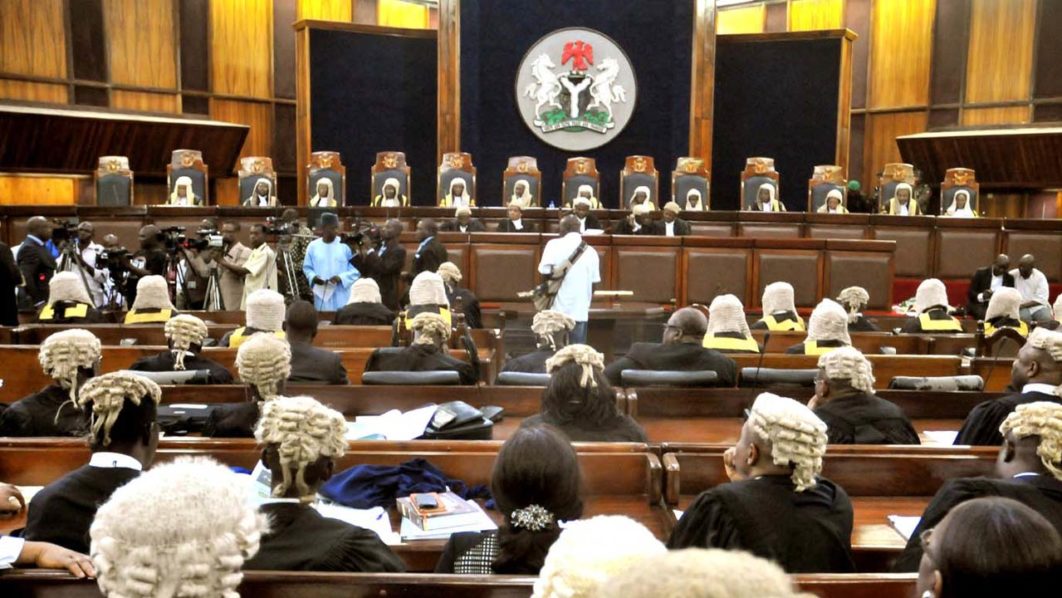
- Nigeria: Judiciary, Politics, and Democratic Anxiety
Nigeria’s Fourth Republic (since 1999) presents one of the most contested judicial environments in modern democracies.
Key Concerns
- Politicisation of Judicial Decisions
Election tribunals frequently determine political outcomes, making courts perceived political actors. - Conflicting Judgments
Overlapping court orders undermine legal certainty and public confidence. - Executive Influence Allegations
Appointments, disciplinary processes, and enforcement mechanisms raise questions about autonomy. - Constitutional Interpretation Crisis
Courts increasingly settle intra-party disputes, legislative leadership battles, and electoral controversies.
The judiciary risks becoming an extension of political competition rather than an impartial arbiter.
- Judicial Integrity and the Role of Legal Elites
Nigeria possesses distinguished jurists, scholars, and legal institutions. Yet critics argue institutional silence has enabled gradual erosion of judicial authority.
A democracy survives not only through constitutions but through professional courage.
As Alexander Hamilton wrote in Federalist No. 78:
“The judiciary has neither force nor will, but merely judgment.”
When judgment loses credibility, democracy loses legitimacy.
- The Real Meaning of Separation of Powers Today
Separation of powers should be reinterpreted as:
Functional Independence + Institutional Accountability + Democratic Legitimacy
Not rigid division, but equilibrium.
Key modern principles:
1. Judicial security of tenure
2. Transparent appointments
3. Financial autonomy
4. Ethical accountability
5. Constitutional clarity
- Elections 2026–2027: A Global Democratic Test
Upcoming electoral cycles in the UK, US, Nigeria, and Kenya will test:
• judicial neutrality in electoral disputes
• constitutional resilience
• executive restraint
• rule-of-law credibility
Where courts are trusted, democracy stabilizes.
Where courts are doubted, elections become existential crises.
- Conclusion: Rethinking Power, Preserving Democracy
The greatest threat to democracy may not be elections themselves but institutional imbalance — particularly when executive authority indirectly shapes the judiciary that must later judge it.
Separation of powers is not obsolete, but it requires renewal.
Democracy demands:
• independent courts,
• responsible executives,
• courageous legislatures,
• and vigilant citizens.
The Nigerian experience offers a warning, while global democratic trends offer lessons: constitutional democracy survives only when justice is not merely proclaimed independent but seen, trusted, and experienced as independent.
Ultimately, the question is not whether separation of powers exists in theory, but whether citizens believe it exists in practice.