
By. Mazi Godson Azu
Director, CM Centre for Leadership and Good Governance (UK)
⸻
Abstract
Nigeria faces a deepening food security crisis that is not solely rooted in agricultural production but in the complex political economy of governance, conflict, demographic pressures, and climate stress. Using a framework grounded in place, people, power, and peace, this article examines how sub-national dynamics and state politics have shaped outcomes in Nigeria’s food systems over the past decade. The paper highlights the structural crisis of food insecurity, its geographic disparities, socio-economic determinants, institutional weaknesses, and the security–food nexus. Special attention is paid to the experiences of Benue, Plateau, Taraba, and Nasarawa States, which collectively form a key part of Nigeria’s food belt. The article concludes with policy recommendations for generating sustainable, peace-sensitive food security outcomes.
⸻
- Introduction: Food Security as a Political and Development Issue
Food security—defined as reliable access to sufficient, safe, and nutritious food for all people year-round—is fundamentally political, particularly in Nigeria where governance, conflict, economic policy, climate variability, and inequality converge to shape disparities in food availability and access. Over the last decade, food insecurity has shifted from isolated incidents to a persistent crisis threatening socio-economic development, human capital formation, and national stability.
This article employs an analytical lens that considers place (geographic and ecological factors), people (demographics and livelihoods), power (policy and institutions), and peace (security and conflict) to explore how structural forces shape who eats and who goes hungry.
⸻
- Trends in Nigerian Food Security (2016–2026)
Nigeria’s food security situation has deteriorated sharply in recent years. According to recent humanitarian assessments and Cadre Harmonisé analyses, millions of Nigerians face acute food insecurity:
• In 2024, an estimated 26.5 million Nigerians were food insecure, with nearly 9 million children at risk of acute malnutrition—driven by violent conflict, economic shocks, and climate impacts. 
• The 2025 Cadre Harmonisé projected that 33.1 million people would face acute food insecurity due to inflation, conflict, and environmental stress. 
• In 2026, the United Nations warned that up to 35 million Nigerians could experience severe hunger—the highest level ever recorded—due to escalating conflict and a collapse in humanitarian funding. 
These figures underscore that food insecurity in Nigeria is not episodic, but a long-term structural crisis.
⸻
- Place: Geography, Climate, and Regional Disparities
a. Conflict-Affected Zones
States in the Northeast and Northwest—such as Borno, Adamawa, Yobe, Sokoto, and Zamfara—consistently report high levels of food insecurity due to insurgency and armed violence disrupting agricultural cycles and displacing communities. 
b. Climate Variability
Recurring floods (2022–2025) and drought episodes have submerged farmland, damaged crops, and reduced yields, compounding food security risk. 
c. Regional Food Belt Challenges
While the South remains relatively more peaceful, its exposure to rising food prices and macroeconomic pressures (e.g., inflation driven by subsidy removal) means that vulnerability is widespread across regions.
Key Insight: Geographic disparities necessitate differentiated policy responses tailored to place-specific risks and agro-ecological conditions.
⸻
- People: Demographics, Livelihoods, and Social Structures
Nigeria’s food security crisis is tightly linked to household-level vulnerabilities:
• Around 70% of Nigerians engage in farming for subsistence, yet high poverty and shallow rural markets limit food access despite abundant production potential. 
• Rural–urban migration, especially among youth, depletes agricultural labour, weakening production capacity.
• Survey evidence shows that household size, income, and education directly influence food security status, with larger households and low incomes correlating with increased insecurity. 
⸻
- Power: Governance, Policy, and Political Economy
a. Policy Frameworks and Implementation Gaps
Nigeria hosts strategic food security platforms, including the Cadre Harmonisé early warning system coordinated by FAO, WFP, and government partners. Yet persistent implementation gaps and weak state capacity reduce policy effectiveness. 
b. Macroeconomic Shocks
The removal of fuel subsidies and naira devaluation have increased transport and input costs, contributing to food price inflation and reducing household purchasing power. 
c. Institutional Challenges
Underinvestment in agricultural infrastructure, inconsistent policies, and limited extension support constrain productivity and resilience.
d. International Partnerships
Nigeria has engaged in bilateral deals to enhance mechanisation and agribusiness capacity, but the translation of these agreements into on-farm impact remains uneven due to governance and security constraints.
⸻
- Peace: Security, Conflict, and Food Systems
Conflict remains the most immediate driver of food insecurity in Nigeria. Insurgency in the North and inter-communal farmer–herder violence in the Middle Belt have disrupted planting, reduced yields, and displaced millions. 
Conflict-induced shocks—such as forced migration, abductions, and fatalities—significantly increase food insecurity and deteriorate dietary diversity. 
⸻
- Impacts on Development and Sustainability
Persistent food insecurity undermines human capital development by fueling malnutrition, reducing labour productivity, and eroding educational outcomes, particularly among children. At the same time, agricultural stagnation limits the sector’s capacity to support economic diversification and structural transformation.
⸻
- Sub-National Realities: Benue, Plateau, Taraba, and Nasarawa
Benue State: Centre of Production, Caught in Conflict
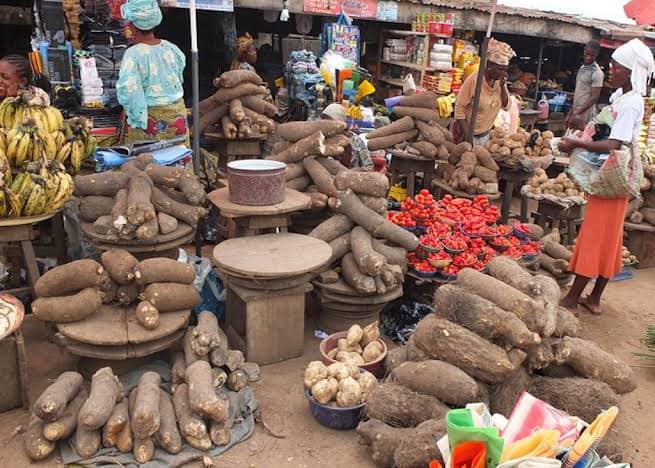
Benue is a major producer of yams, maize, rice, and cassava. Yet, chronic farmer–herder conflict has displaced farming communities, leading to abandoned farmlands, disrupted cropping seasons, and reduced output. Empirical studies show that increases in insecurity correlate with measurable reductions in agricultural output. 
⸻
Plateau State: Ecological Advantage, Fragmented Peace
Plateau’s temperate climate supports diverse crops and livestock, but episodic communal violence has reduced investment confidence, particularly for high-value and perishable crops, slowing productivity gains. 
⸻
Taraba State: Abundance Without Access
Despite rich agro-ecological zones, Taraba faces structural constraints including poor rural infrastructure, limited processing facilities, and localized insecurity. Household surveys show that over half of farming families are food insecure, with coping strategies including meal reduction and diet simplification. 
⸻
Nasarawa State: Market Opportunities, Emerging Pressures
Nasarawa’s proximity to Abuja offers market access, but land competition, urban expansion, and growing tensions over land use threaten smallholder access to productive farmland.
⸻
- Localised Policy Recommendations
Benue:
• Protected farming corridors and strengthened community security
• Reintegration programmes for displaced farmers
Plateau:
• Early-warning and dispute mediation mechanisms
• Investment in cold-chain and storage for perishables
Taraba:
• Rural road and market infrastructure upgrades
• Rice and cassava processing centres
Nasarawa:
• Land tenure formalisation and peri-urban planning
• Expansion of smallholder market access
⸻
- Conclusion
Nigeria’s food security crisis is a reflection of political failures as much as agronomic limitations. The interplay of geography, socio-economic vulnerability, governance weaknesses, and conflict undermines the productive capacity of households and states alike. Addressing food insecurity requires integrated solutions that weave together security, governance, place-sensitive policies, and sustainable agricultural investments.
⸻
References
• Dabo, N. M., Garba, M., Yakubu, S., & Abdullahi, S. (2024). Effect of Farmer–Herders Conflicts on Food Security in Taraba State, Nigeria. Nigerian Journal of Agriculture and Agricultural Technology, 4(2), 225–237. https://doi.org/10.59331/njaat.v4i2.708 
• FAO, WFP, UNICEF, & Government of Nigeria. (2025). Nigeria Faces Escalating Hunger Crisis: 34.7 million at risk. FAO. 
• Ijirshar, V. U., Udaah, I. I., & Mile, B. N. (2025). Effect of Insecurity on Agricultural Output in Benue State, Nigeria. arXiv. 
• Musa, A., & Bulus, G. (2025). Analysis of Food Security Status of Farming Households in Wukari LGA, Taraba State. Journal of Agricultural Economics, Environment and Social Sciences. 
• Otakpor, U. A.** (2025). From Breadbasket to Battleground in Nigeria’s Middle Belt: Implications for Food Security. Food Security Insights. 
• Olanrewaju, O., & Balana, B. B. (2023). Conflict-Induced Shocks and Household Food Security in Nigeria. Sustainability, 15(6), 5057. 
• WFP & UN Reports. (2025-2026). Nigeria food insecurity projections. Reuters & AP News.
Godson is a UK based international relations and politics expert.