By Mazi Godson Azu
Introduction: Why Symbols Matter in Politics
Political symbols are not mere decorations of democratic competition; they are the grammar of mass politics. In societies with diverse literacy levels, ethnic plurality, and ideological fragmentation—such as Nigeria—symbols function as shortcuts of meaning, helping voters identify parties, ideologies, and policy traditions.
As political theorist Hannah Arendt warned:
“The ideal subject of totalitarian rule is not the convinced Nazi or the convinced Communist, but people for whom the distinction between fact and fiction no longer exists.”
When symbols lose clarity or are deliberately blurred, democratic choice itself becomes confused.
This context makes the emergence of a personal political cult symbol associated with President Bola Ahmed Tinubu, appearing to rival or even overshadow the official party symbol of the All Progressives Congress (APC), a deeply consequential development—politically, legally, and normatively.
Political Symbols in Party Democracy: Global and Nigerian Context
In party-based representative democracies, political symbols serve four core purposes:
1. Legal identification (on ballots and electoral materials)
2. Ideological continuity (what the party historically stands for)
3. Voter orientation (especially for semi-literate electorates)
4. Institutional loyalty (to parties, not individuals)
In Nigeria, this role is explicitly codified.
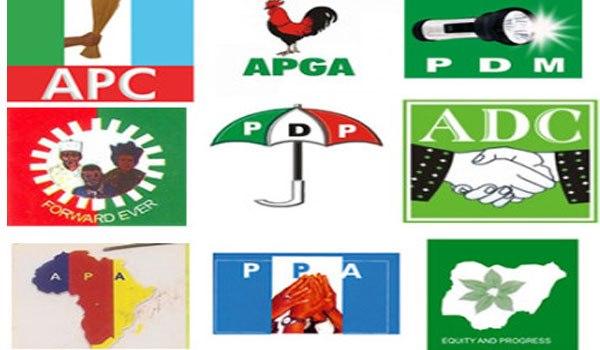
According to INEC regulations and the Electoral Act, elections are conducted strictly on the basis of:
• Registered political parties
• Approved party logos and symbols
• Party names appearing on the ballot
Voters are legally guided to identify parties—not personalities—through symbols.
This is not accidental. As Maurice Duverger, the father of modern party theory, noted:
“The strength of democracy lies in the permanence of institutions, not the brilliance of individuals.”
The Sudden Rise of a Personal Political Cult Symbol
Against this institutional backdrop, Nigeria is witnessing something unusual:
the informal elevation of a personal political symbol associated with President Tinubu, deployed across political rallies, loyalist movements, and partisan narratives—sometimes more visibly than the APC’s broom symbol.
This raises an unavoidable question:
How does a democracy grounded in party competition begin to substitute institutional symbols with personal ones?
More critically:
Does this not contradict the very logic of party democracy and INEC’s electoral framework?
Party Symbol vs. Personality Symbol: A Dangerous Duality
We now appear to operate with two parallel symbolic systems:
Electoral Process
Political Mobilisation
Party symbol (APC broom)
Personal cult symbol
INEC-regulated
Informal & emotional
Institutional loyalty
Personal loyalty
Democratic choice
Identity-based followership
This duality creates a symbolic contradiction.
As Max Weber famously distinguished, political authority rests on:
• Legal-rational legitimacy (institutions, laws, offices)
• Charismatic authority (personal devotion to a leader)
When charismatic symbols overwhelm institutional ones, democracy risks sliding from party governance into personal rule.
Weber warned:
“Charisma, once routinized, either disappears or becomes authoritarian.”
From Party Loyalty to Cult Followership
Political parties are meant to outlive leaders.
Cult symbols do the opposite—they collapse party identity into one personality.
This has serious implications:
- Erosion of Party Ideology
If loyalty shifts from APC’s values to Tinubu’s persona, the party becomes a vehicle, not an institution.
- Weak Internal Democracy
Party dissent becomes betrayal. Internal criticism is framed as disloyalty to the leader, not debate within the party.
- Post-Leadership Crisis
What happens to the party when the leader exits power?
History shows that personality-driven movements often fragment afterward.
As Chinua Achebe once observed:
“The trouble with Nigeria is simply and squarely a failure of leadership.”
But leadership failure is often reinforced by followers who replace institutions with individuals.
⸻
Comparative Lessons from History
Political history offers cautionary parallels:
• Peronism (Argentina) – survived, but only by institutionalizing the cult
• Nkrumahism (Ghana) – collapsed with the leader
• ZANU-PF (Zimbabwe) – became synonymous with one man, hollowing democracy
• Trumpism (USA) – blurred party ideology into personal loyalty
In each case, symbols were weaponized to build emotional allegiance beyond party structures.
As George Orwell warned:
“Political language is designed to make lies sound truthful and murder respectable.”
Symbols are part of that language.
INEC, Electoral Law, and Democratic Consistency
INEC does not recognize:
• Personal logos
• Leader-specific cult symbols
• Informal political insignia
Elections are party-based, not personality-based.
Thus, while informal political symbolism may be constitutionally protected as expression, its political normalization creates confusion:
• Voters campaign emotionally but vote institutionally
• Loyalty is personal, accountability is institutional
• Power is centralized, responsibility is diffused
This contradiction weakens democratic coherence.
The Bigger Question: What Kind of Democracy Does Nigeria Want?
Is Nigeria building:
• Institutional democracy, where parties matter more than people?
or
• Charismatic democracy, where symbols follow men, not manifestos?
As Nelson Mandela once said:
“A leader is like a shepherd. He stays behind the flock, letting the most nimble go out ahead.”
A democracy where the leader becomes the symbol risks turning citizens into followers, not participants.
Conclusion: Symbols Are Never Neutral
Political symbols are powerful instruments of meaning.
When party symbols are diluted by personal cult imagery, democracy quietly shifts—often without formal constitutional change.
Nigeria must decide whether:
• Political loyalty belongs to institutions and ideas, or
• To individuals and emotional symbolism
The survival of party democracy depends on that choice.
As Alexis de Tocqueville warned centuries ago:
“The health of a democratic society may be measured by the quality of functions performed by private citizens.”
And those citizens deserve clarity, not confusion, about who and what they are voting for at elections.
Mazi Godson Azu is a UK based International Relations and Politics Expert.