If All Humans Are Born Free, Why Are We Still in Chains Everywhere?
The Politics of Personality Worship, Political Sycophancy and the Eclipse of APC Ideology
By Godson Azu
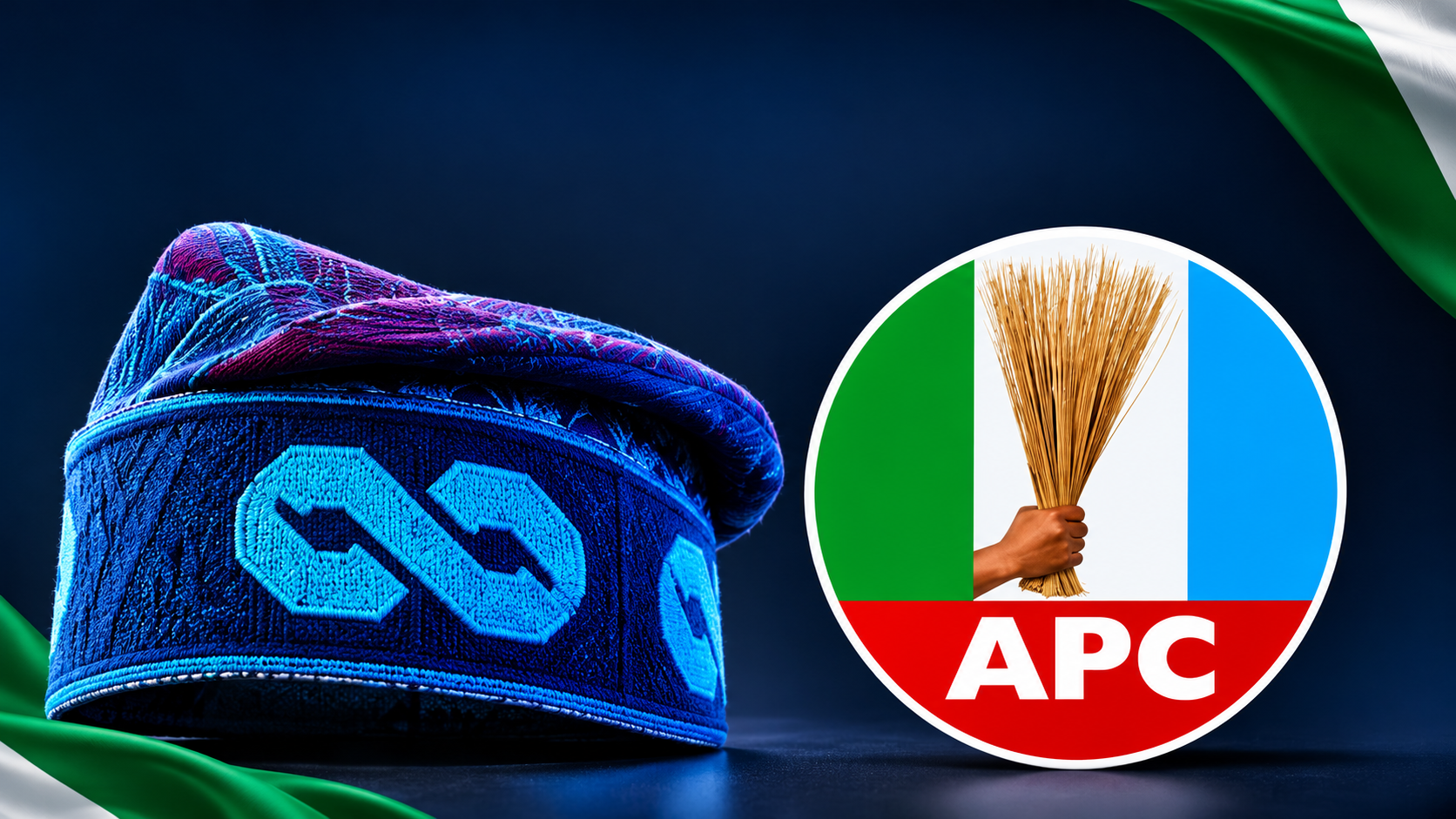
If the chain-like insignia associated with President Bola Ahmed Tinubu is supposedly a symbol of breaking chains, then Nigerians must ask an uncomfortable but legitimate question: whose chains have actually been broken—and why are millions of Nigerians still chained by poverty, hunger, insecurity, unemployment and economic hardship?
A political symbol may carry a message of hope, liberation and resilience. But when the personal insignia of a political leader begins to command greater visibility, loyalty and political significance than the official symbol and ideology of the political party, it raises a troubling question about the direction of our democracy.
Are we promoting party ideology, or worshipping political personalities?
Tinubu’s distinctive chain-like insignia has become a recognisable symbol of his personal political identity. His supporters are entitled to wear it, celebrate it and associate with it. There is nothing inherently unconstitutional about a politician having a personal brand or trademark.
But democracy must draw a line between personal political branding and the institutional identity of a political party.
The All Progressives Congress has its own registered party identity, symbol, manifesto, constitution and political structures. Its broom is not merely an emblem; it represents the party’s collective political identity. Why, therefore, should the personal insignia of one man appear to be increasingly elevated above the party’s own symbol and ideology?
Is the APC becoming a political institution—or a personality-driven movement built around one man?
That is the question.
From political following to political worshipping
Nigeria has developed an unfortunate political culture in which some supporters mistake criticism for betrayal, disagreement for hostility and political loyalty for unquestionable devotion.
Political leaders are elected to serve. They are not crowned to be worshipped.
The President is neither a deity nor a political messiah. He is a constitutional officeholder, elected for a defined tenure, answerable to the Constitution, the law and the Nigerian people.
When political allegiance becomes centred on an individual’s image, insignia, slogan and personality rather than policies, performance and ideology, democracy begins to lose its substance.
A political party should be bigger than its leader. Its ideology should outlive its President. Its institutional identity should survive the departure of whoever occupies its highest political office.
Where the leader’s personal insignia becomes the badge of political acceptance, where public officials feel compelled to display it, and where loyalty to the individual appears to supersede commitment to the party, the Constitution and public service, we must be bold enough to question whether personality-centred politics is evolving into a dangerous culture of political worship.
This is not an allegation of secret cult membership. It is a criticism of the politics of excessive personal loyalty—the kind that can turn political followership into personality worship.
The broom must not be swept aside
The APC was not registered as the Bola Tinubu Personal Political Association. It is a political party with a constitution, manifesto, membership and collective institutional identity.
Tinubu may be its dominant political figure today, but he is not the party itself. His personal insignia is not the APC’s official electoral symbol, nor should it be confused with one.
Nigeria’s Electoral Act 2022, particularly Sections 79 and 80, regulates political party symbols and their allotment to party-sponsored candidates. The Constitution also provides for the organisational and democratic requirements governing political parties.
Personal political branding is one thing; institutionalising personal loyalty within the political and governmental structures of a republic is quite another.
The APC broom should not be overshadowed by an individual’s emblem. A political party must never lose its identity to the personality of its leader.
If the chains are broken, where is the freedom?
The symbolism of broken chains is particularly ironic in a country where millions remain trapped in economic misery.
Where is the freedom from hunger?
Where is the freedom from insecurity?
Where is the freedom from unemployment?
Where is the freedom from crushing living costs?
Where is the freedom from corruption, political patronage and institutional impunity?
A cap cannot feed a hungry family. An insignia cannot secure a community. A political emblem cannot replace sound economic policy, responsible governance or institutional accountability.
If the symbol represents liberation, Nigerians should experience that liberation in their homes, their businesses, their communities and their daily lives—not merely see it embroidered on the caps of political loyalists.
The chains Nigerians want broken are the chains of hardship—not the chains of political branding.
Nigeria is a republic, not a political shrine
Public institutions belong to the Nigerian people. Government offices are not personal estates. Public officials are not political disciples. The Presidency is an institution—not a personality shrine.
A healthy democracy encourages independent thought, constructive criticism, ideological debate and accountability. It does not demand uniformity of personal devotion.
We must not confuse the President’s political brand with the identity of the Nigerian state, nor confuse the APC with the personality of its current leader.
Tinubu is not Nigeria. The APC is not Tinubu. The Constitution is not a political insignia.
Nigeria belongs to its citizens.
The final question
If all humans are born free, why are Nigerians still in chains everywhere?
If a symbol represents breaking chains, why does political loyalty increasingly appear to be expressed through the symbolism of one man?
If the APC has an ideology, a manifesto and an official symbol, why should the personal insignia of its leader become more pronounced than the party’s collective identity?
And if democracy is about the people, why are personalities increasingly placed above policies, institutions and accountability?
Nigeria needs leaders—not idols.
It needs institutions—not personality shrines.
It needs political parties with ideology—not political followership built around unquestionable devotion.
Let us break the chains of poverty, insecurity, corruption, sycophancy, impunity and personality worship.
The chains may be broken on the cap, but if the chains remain on the people, what exactly has been liberated?
Nigeria must break free from hardship—not surrender to the political worship of personalities.
Godson Azu
International Development Expert | Global Affairs Analyst | Political Commentator | Leadership & Good Governance Consultant | Pan-Africanist