By Godson Azu
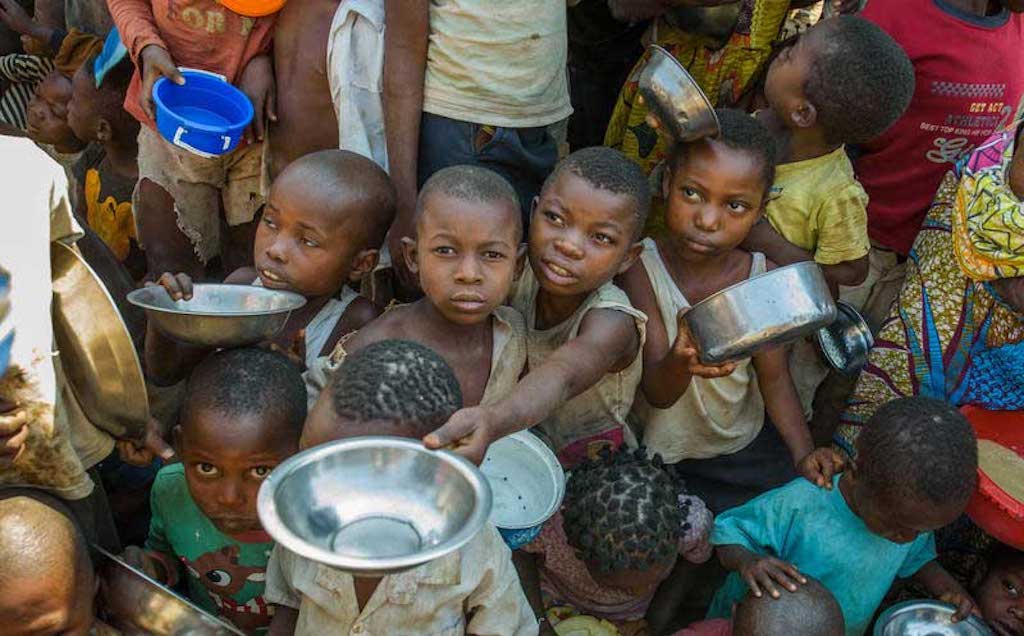
Hunger in Nigeria is no longer merely an economic condition; it has become a political instrument. Poverty is no longer an unfortunate by-product of governance failure; it is increasingly a tool of control, strategically embedded in Nigeria’s political economy to sustain elite dominance and weaken popular resistance.
As Nigeria approaches the critical 2026–27 electoral cycle, the country stands at a moral and political crossroads: will hunger continue to be weaponised against the people, or will the people finally weaponise their votes against a system that thrives on their deprivation?
This is not simply a question of elections. It is a question of power, survival, and collective awakening.
The Political Economy of Hunger
Nigeria is Africa’s largest economy by GDP and one of its most resource-endowed nations, yet it hosts one of the world’s largest populations of extremely poor people. This contradiction is not accidental; it is systemic.
Over decades, successive political elites have presided over:
• Chronic underinvestment in agriculture despite vast arable land
• Policy instability that destroys small businesses and informal livelihoods
• Inflationary fiscal choices that erode wages and savings
• Subsidy regimes and palliatives designed to pacify, not empower
Hunger weakens dissent. Poverty exhausts civic engagement. A population worried about its next meal is less able to organise, protest, or demand accountability. In this sense, economic hardship becomes a silent enforcer of political obedience.
Elections in such an environment are distorted before the first ballot is cast.
Vote-Buying, Food Politics, and the Normalisation of Desperation
Nigeria’s electoral process has increasingly reflected a grim reality: votes are exchanged not for ideology or vision, but for survival.
Rice, noodles, cash handouts, transport fares, and temporary relief packages have become substitutes for long-term policy commitments. What should be a contest of ideas has become a transaction shaped by hunger.
This is not because Nigerians lack political intelligence; it is because desperation limits choice. When poverty is deep enough, short-term relief feels rational even when voters understand it perpetuates the cycle.
The tragedy is that hunger has been normalised as both a campaign strategy and a governance outcome.
The Elite Consensus: Different Parties, Same Structure
Nigeria’s political class is often divided by party labels but united by shared economic insulation. Whether ruling or opposition, many elites:
• Are shielded from inflation by foreign assets
• Educate and treat their families abroad
• Benefit from currency arbitrage and import-dependent systems
• Thrive in regulatory chaos
For the political elite, economic instability is inconvenient but manageable. For the ordinary Nigerian, it is existential.
This imbalance explains why hunger persists despite constant political rhetoric. The system works—just not for the people.
2026–27: A Potential Breaking Point
What makes the coming election cycle different is not just worsening economic hardship, but a changing public consciousness.
Several shifts are underway:
• A younger, digitally connected population less loyal to political godfathers
• A growing understanding of how policy choices create poverty
• Increasing anger at elite indifference and performative governance
• Expanding civic conversations beyond ethnicity and religion toward competence and accountability
Hunger can suppress resistance—but it can also radicalise it.
History shows that when economic pain crosses a certain threshold, citizens stop negotiating for crumbs and begin demanding structural change.
The People vs. the Political Elites
The emerging struggle is no longer North vs. South, Christian vs. Muslim, or party vs. party. It is increasingly the people vs. a political class that has failed to translate power into prosperity.
The central question for 2026–27 is this:
Will Nigerians continue to vote under the psychology of scarcity, or will they vote with the consciousness of ownership?
True political change will not come from new slogans, but from:
• Rejecting vote-buying as an insult, not assistance
• Demanding economic literacy from candidates, not charity
• Organising beyond election seasons
• Protecting votes as fiercely as livelihoods
Democracy cannot survive where hunger is institutionalised.
Conclusion: Hunger Is Political—So Must Be the Response
Hunger in Nigeria is not fate. It is policy. Poverty is not destiny. It is design.
If deprivation has been used as a weapon of control, then political participation must become the weapon of liberation. The 2026–27 election cycle offers Nigerians not a guarantee of change, but an opportunity to disrupt a long-standing imbalance of power.
The question is no longer whether the political elites will reform themselves. History suggests they rarely do.
The real question is whether the people are ready to reclaim power—not with anger alone, but with strategy, solidarity, and sustained civic courage.
The time is not coming.
The time is now.