By Mazi Godson Azu
Director, CM Centre for Leadership and Good Governance UK
Convener, Annual London Political Summit & Awards
Introduction
Presidential state visits are not mere ceremonial pageantry; they are strategic tools of diplomacy that can unlock trade partnerships, secure investments, bolster national security cooperation, deepen cultural ties, and elevate a country’s standing in the global order. For a nation like Nigeria Africa’s most populous country and largest economy — such engagements are particularly consequential. They offer opportunities to diversify economic partnerships, attract foreign direct investment (FDI), strengthen infrastructure cooperation, and address shared security and development challenges.
Under President Bola Ahmed Tinubu, Nigeria has embarked on an active foreign policy that includes visits to Brazil, Argentina, the United Arab Emirates (Dubai), France, and now Türkiye (Turkey). Analysts and government advisors assert these travels are designed to convert diplomatic goodwill into tangible economic and strategic results. 
Why Presidential State Visits Matter
- Diplomacy as Economic Strategy
State visits create high-level political platforms where agreements, memoranda, and joint statements are signed — moving bilateral relations from rhetoric to results. They help:
• Attract Foreign Direct Investment (FDI): Nigeria’s diplomatic engagements have reportedly generated commitments exceeding US$50 billion in FDIs across sectors including infrastructure, energy, manufacturing, and services. 
• Promote Trade Diversification: Strategic diplomacy opens new markets beyond traditional partners. High-level dialogues with Brazil, France, UAE, and China aim to expand non-oil exports, diversify Nigeria’s export base, and integrate into regional and global value chains. 
- Trade & Market Access
State visits help negotiate trade terms, reduce tariffs, create bilateral trade commissions, and strengthen economic corridors. For example:
• Bilateral agreements with Brazil aim to revitalize agricultural partnerships and mechanized farming initiatives, which could transform Nigeria’s food production capacity and reduce import dependency. 
• Engagements with European partners have led to infrastructure cooperation and funding for development projects in transportation, healthcare, and education. 
- Security Cooperation
Diplomatic tours often include defense diplomacy — sharing intelligence, joint training, and procurement of defense equipment to address internal and regional security challenges. Collaborative security agreements and defense partnerships help Nigeria confront insurgency, transnational crime, and border threats. 
- Cultural Diplomacy and Soft Power
State visits enhance people-to-people ties: educational exchanges, cultural cooperation agreements, tourism linkages, and diaspora engagement — all strengthening mutual understanding and long-term strategic goodwill.
Is President Tinubu’s Global Tour Significant?
Critics sometimes characterize international trips as symbolic. However, government sources and analysts argue that these trips carry material benefits. The emphasis — according to Nigeria’s foreign affairs leadership — is on strategic engagement rather than ceremonial diplomacy. 
Economic Impact
• FDI and Investment Pledges: As noted, Nigeria’s engagements reportedly yielded over $50 billion in investment commitments within two years, reflecting renewed global confidence. 
• Trade Opportunities: Deals in agriculture, technology, and aviation are expected to lower logistics costs, enhance exports, and elevate Nigeria’s global economic footprint. 
Poverty Reduction & Jobs
Foreign partnerships help create value chains, industrial parks, and agricultural mechanization projects that can generate employment for Nigerians and reduce poverty by boosting productivity and income. 
Infrastructure Development
State visits have been linked to agreements in infrastructure — especially transport corridors, energy projects, and inter-regional connectivity — that directly impact economic activity and long-term growth potential. 
Security & Stability
Diplomatic engagements also support Nigeria’s security framework by fostering defense cooperation and enhancing Nigeria’s capacity to counter internal and regional threats through shared intelligence and equipment acquisition. 
Why Visit Türkiye? A Strategic Overview
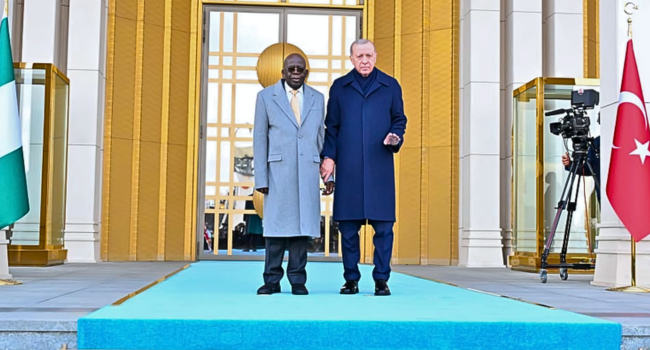
President Tinubu’s recent visit to Türkiye is a case study in targeted foreign engagement. Türkiye offers Nigeria several strategic advantages:
• Geopolitical Position: Türkiye’s location bridges Europe, the Middle East, and Asia, serving as a logistical gateway for Nigerian exports and investments. 
• Industrial and Defense Cooperation: Türkiye has a robust industrial base and is a significant exporter of defense equipment, which aligns with Nigeria’s needs for security modernization. 
• Growing Trade Relationship: Trade between Türkiye and Nigeria has been expanding, with bilateral trade reaching hundreds of millions of dollars and plans to grow it further. 
• People-to-People and Cultural Links: Scholarships, educational exchanges, and cultural cooperation are part of the evolving partnership, deepening long-term bilateral ties. 
In short, Türkiye is viewed not just as a trading partner, but as a strategic ally capable of supporting Nigeria’s industrialization, technology transfer, and infrastructure development goals. 
Recommendations for Strategic Foreign State Visits
To ensure that foreign tours translate into impactful outcomes for Nigeria’s development agenda, the following strategic principles are recommended:
- Agenda-Driven Diplomacy
Each visit must be guided by clear national priorities — such as industrial growth, food security, energy cooperation, education, and defense — with measurable deliverables.
- Pre-Visit Preparation & Stakeholder Engagement
Inclusive preparation involving private sector, civil society, sector ministries, and investment promotion agencies will ensure missions are aligned with domestic capabilities and needs.
- Post-Visit Follow-Up Mechanisms
Establish dedicated follow-up teams to monitor the implementation of agreements, track investment commitments, and resolve bottlenecks in delivery.
- Balanced Multilateral Engagement
Nigeria should continue leveraging multilateral forums (AU, OIC, G20, BRICS) to amplify its voice, secure collective action on regional security and economic integration, and attract diversified foreign support.
- Domestic Policy Alignment
Foreign engagements must align with domestic reforms — fiscal stability, regulatory reforms, and governance improvements — to convert diplomatic goodwill into sustainable investment outcomes.
Conclusion
Strategic foreign state visits — when aligned with national development priorities and backed by structured follow-up — can be powerful instruments of diplomacy. President Tinubu’s global tours reflect a proactive approach to positioning Nigeria within a competitive global economy. While these engagements cannot by themselves solve all of Nigeria’s structural challenges, they are essential components of a broader strategy to attract investment, foster trade, strengthen security cooperation, and build sustainable partnerships that can drive long-term growth and stability.