A Comparative Analysis of Leadership Age, Power, and Representation in the United States, China, Russia, Brazil, India, Nigeria, Uganda, Cameroon, Côte d’Ivoire, and Equatorial Guinea
By Mazi Godson Azu
Director, CM Centre for Leadership and Good Governance (UK)
Across continents and political systems, global governance in the 21st century is increasingly characterised by ageing political leadership presiding over rapidly youthful populations. This article interrogates whether contemporary global governance has evolved into a form of political gerontocracy, particularly in an era shaped by Generation Z (Gen Z), digital transformation, climate urgency, and shifting norms of political legitimacy. Through a comparative analysis of major global and regional powers, the article explores the structural, cultural, and institutional reasons behind leadership longevity and questions its implications for democratic representation, policy innovation, and intergenerational equity.
- Introduction: The Generational Paradox of Power
The modern world is young but its leaders are not.
While Gen Z now constitutes a decisive demographic force globally, political power remains overwhelmingly concentrated in the hands of men in their late 60s, 70s, 80s, and even 90s. This contrast is not merely symbolic; it raises fundamental questions about representation, responsiveness, and relevance in governance systems confronting unprecedented technological, environmental, and social change.
The paradox is stark:
A youthful world governed by leaders whose formative political experiences belong largely to the Cold War era.
- Comparative Overview: Ageing Leadership in a Young World
Table 1: Comparative Leadership Age and Population Median Age
| Country | Current Leader | Approx. Age | Years of Dominant Political Influence | Median Population Age |
| United States | Donald J. Trump | 79 | Since 2016 | 38 |
| China | Xi Jinping | 70 | Since 2012 | 39 |
| Russia | Vladimir Putin | 71 | Since 2000 | 40 |
| Brazil | Luiz Inácio Lula da Silva | 77 | Since early 2000s | 34 |
| India | Narendra Modi | 74 | Since 2014 | 28 |
| Nigeria | Bola Ahmed Tinubu | Early 70s | Since 1990s | 18 |
| Uganda | Yoweri Museveni | 81 | Since 1986 | 16 |
| Cameroon | Paul Biya | 92 | Since 1982 | 18 |
| Côte d’Ivoire | Alassane Ouattara | 83 | Since 2010 | 19 |
| Equatorial Guinea | Teodoro Obiang Nguema Mbasogo | 83 | Since 1979 | 22 |
- Case Studies: Continuity, Control, and Concentration of Power
The United States, China, and Russia
The United States Under Donald Trump: Age, Power, and Political Revival
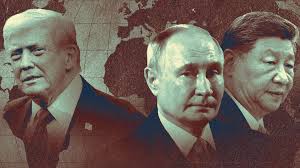
Donald J. Trump’s return to the centre of American political power underscores a critical feature of contemporary democracies: electoral systems do not necessarily produce generational renewal. At nearly 80 years old, Trump represents not only advanced political age but also the revival of a leadership style rooted in grievance politics, nationalism, and institutional disruption.
Trump’s political resurgence illustrates that:
- Age is not a barrier where charisma, media dominance, and polarisation prevail.
- Voter dissatisfaction with political institutions can favour familiar, forceful figures over generational change.
- Democratic systems may recycle ageing elites during periods of uncertainty rather than cultivate new leadership cohorts.
- The United States thus exemplifies how gerontocratic leadership can persist even within competitive democracies, driven by populism rather than institutional stagnation alone.
In major global powers, leadership age reflects institutional continuity rather than demographic renewal. The United States, despite robust democratic competition, has produced its oldest president in history. China and Russia exemplify centralised political systems where leadership longevity is embedded in governance structures, reinforcing stability while limiting generational rotation.
Centralised Power and Leadership Longevity: China and Russia
In China and Russia, leadership age is sustained by institutional structures that prioritise continuity, stability, and elite control. Xi Jinping and Vladimir Putin, both in their early 70s, preside over systems where political succession is tightly managed, and generational turnover is subordinated to regime endurance.
Here, leadership ageing reflects not electoral recycling but systemic consolidation of authority, limiting pathways for younger political actors.
Electoral Democracies and Familiar Leadership: Brazil and India
Brazil’s return to Luiz Inácio Lula da Silva and India’s continued leadership under Narendra Modi demonstrate how democracies often revert to experienced figures during periods of economic or geopolitical strain. While these leaders command legitimacy through elections, their dominance raises questions about whether democratic competition alone is sufficient to ensure generational inclusion
- Africa’s Youthful Majority and Ageing Presidencies
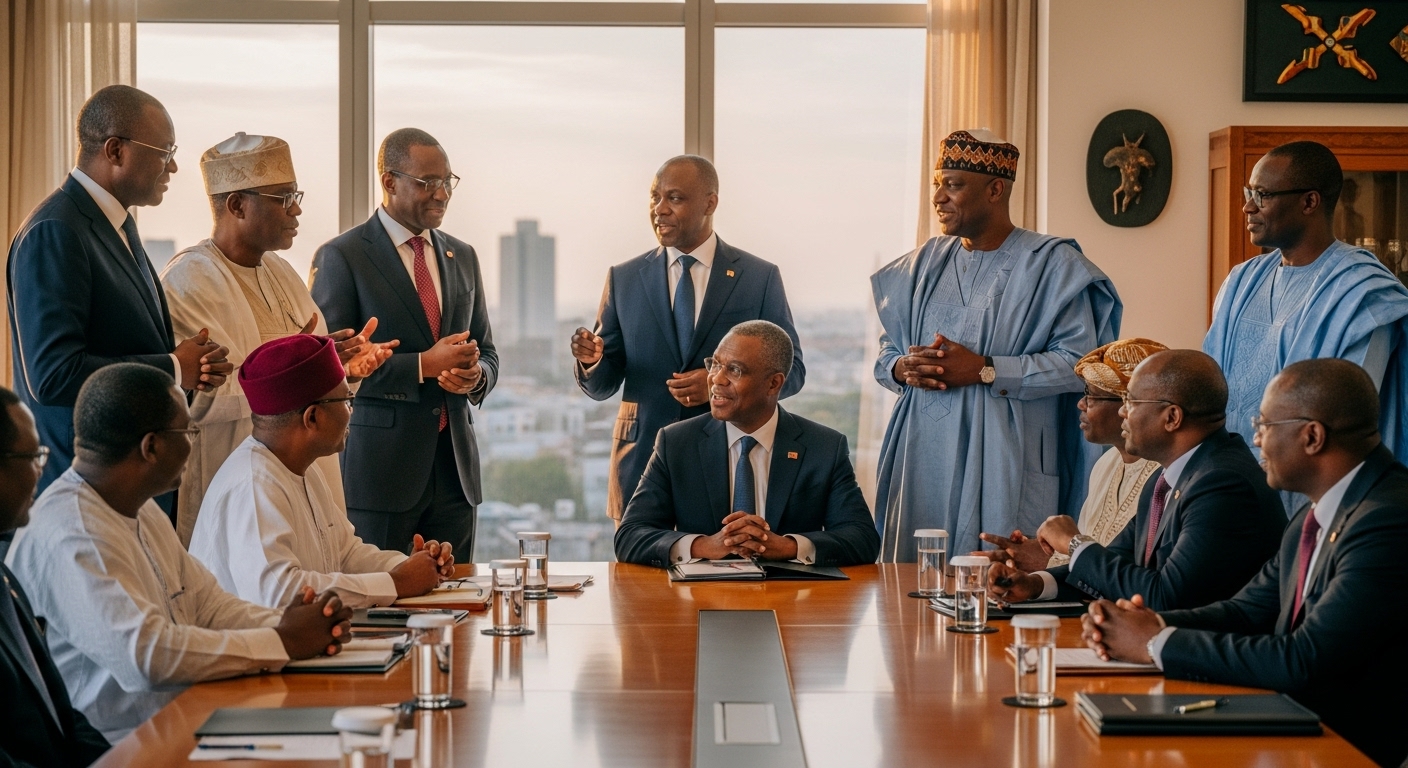
Nowhere is the generational imbalance more pronounced than in Africa the youngest continent globally.
Presidents in Uganda, Cameroon, Côte d’Ivoire, and Equatorial Guinea govern populations where the majority were born after these leaders assumed power. This disconnect has produced recurring cycles of political frustration, youth protest, migration pressures, and legitimacy crises.
Long incumbencies are often justified through narratives of stability, national unity, or security. Yet they frequently coincide with weakened institutions, constrained political competition, and stalled generational transition.
- Nigeria: A Demographic Giant at a Generational Crossroads
Nigeria represents one of the most consequential cases in this analysis.
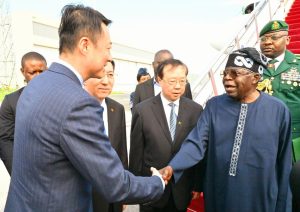
With over 60% of its population under 25, Nigeria is not merely young — it is future-defining. Yet political power remains dominated by an ageing elite whose political ascendancy predates the digital era. President Bola Ahmed Tinubu, in his early 70s, governs a country where Gen Z and young millennials constitute the economic, cultural, and electoral backbone.
The Nigerian Paradox
- Youth dominate innovation, culture, and digital entrepreneurship.
- Political parties and governance institutions remain elite-controlled.
- Youth participation is often mobilised electorally but marginalised structurally.
The #EndSARS movement crystallised this generational tension, signalling demands not only for reform but for systemic renewal. Nigeria thus illustrates a broader dilemma:
A nation of the future governed largely by the custodians of the past.
- Why Does Gerontocratic Leadership Persist?
Several interlocking factors sustain ageing leadership globally:
- Institutional Design: Most constitutions impose no upper age limits.
- Incumbency Advantage: Control of party structures, media visibility, and state resources.
- Cultural Norms: Deference to seniority and political “experience”.
- Risk Aversion: Electorates often choose familiarity during uncertainty.
While experience brings institutional memory and crisis management capacity, it may also foster policy conservatism, resistance to innovation, and generational exclusion.
- Gen Z and the Crisis of Political Representation
Gen Z is reshaping politics beyond traditional institutions through digital activism, decentralised movements, and issue-based mobilisation. Their priorities differ markedly:
- Climate justice
- Digital governance
- Social equity
- Economic inclusion
When leadership structures fail to incorporate these perspectives, the result is often disengagement, protest, or parallel civic spaces outside the state.
- Is a Generational Shift Inevitable?
A meaningful generational shift does not require the removal of older leaders but demands institutional openness:
- Enforced term limits
- Youth inclusion mechanisms
- Leadership succession planning
- Intergenerational governance models
Without these, political systems risk declining legitimacy in societies where youth form the majority.
- Conclusion: Rethinking Leadership for a Young Century
From Washington to Beijing, Moscow to Abuja, Yaoundé to Kampala, global governance remains disproportionately shaped by ageing male elites. This reality is not inherently illegitimate but it is increasingly misaligned with demographic realities and generational expectations.
The central question is no longer simply who governs, but:
Which generation is shaping the future and who is being left out of the room where decisions are made?
Nigeria, alongside other youthful societies, stands as a bellwether. Its ability or failure to integrate generational leadership will signal whether global governance can evolve beyond gerontocracy toward inclusive, forward-looking leadership for the 21st century.
References (Selected)
- Pew Research Center (2024). Age of World Leaders and Democratic Representation.
- United Nations Department of Economic and Social Affairs (UN DESA). World Population Prospects.
- World Bank (2024). Population Age Structure and Governance Indicators.
- African Development Bank. Youth, Governance, and Political Participation in Africa.
- Diamond, L. (2019). Ill Winds: Saving Democracy from Russian Rage, Chinese Ambition, and American Complacency.
- Fukuyama, F. (2018). Identity: The Demand for Dignity and the Politics of Resentment.